
Judgement based decision making a must for innovation and long term value creation
In this letter to shareholders, Bezos shares insights on how decisions are made at Amazon. He indicates that there are two types of decisions, one where decisions can be made with data and the other where decisions need to be made using judgement.
Decisions that can be made with data have a right or wrong answer, a better or worse answer and math tells us which is which. As data is available, such decisions can be modeled and analyzed. While these decisions may require some assumptions and judgements, they come into play only as junior partners. The heavy lifting is done by math. Math based decisions command wide agreement. Bezos provides two examples of decisions that can be made with data - opening of a new fulfilment center and where it should be located, and inventory purchase decisions.
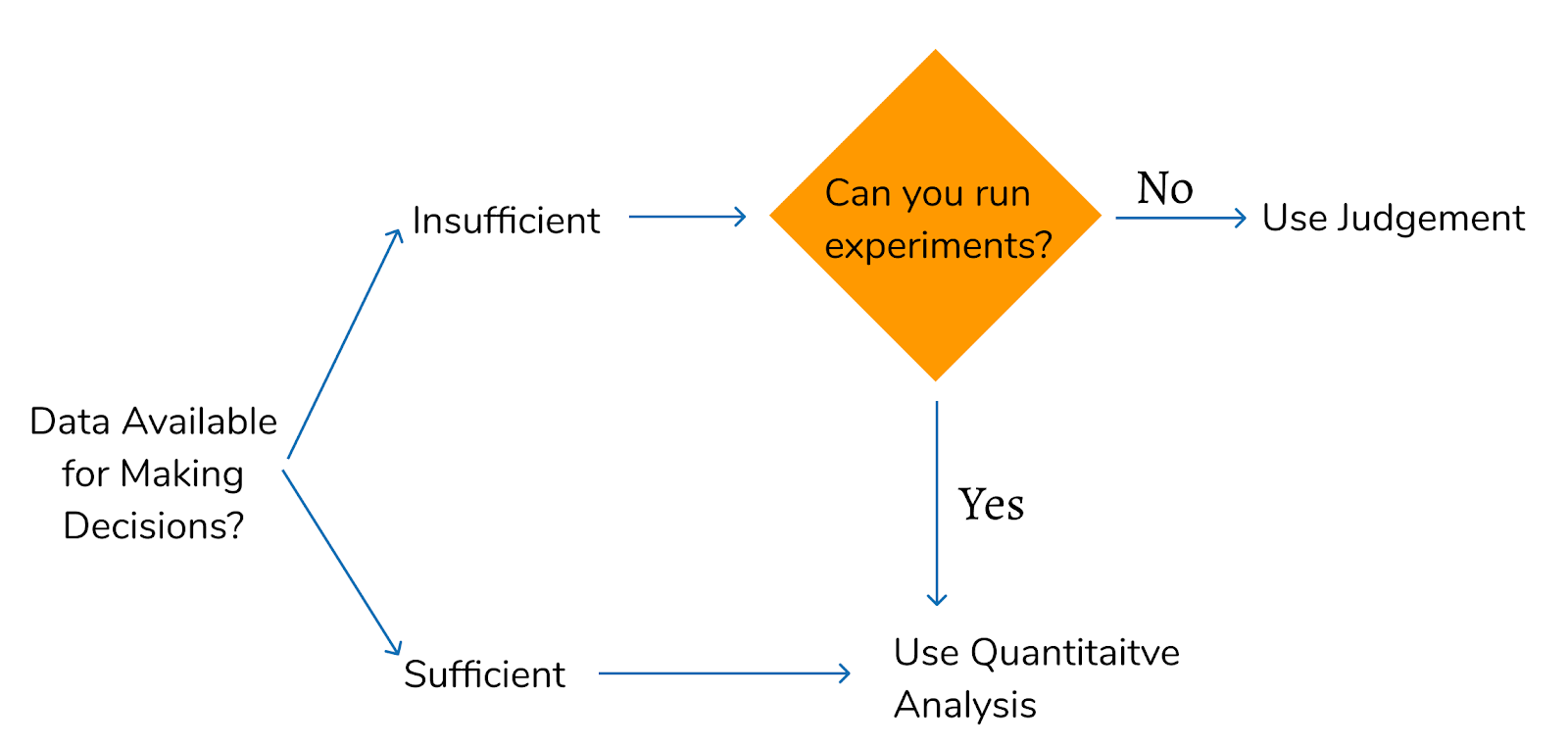
When we have little or no historical data to guide us and proactive experimentation is impractical or tantamount to a decision to proceed - we need to use our judgement. Though data, analysis, and math play a role, the prime ingredient in these decisions is judgement.
Bezos provides an example of price reductions as an example. Math can predict, increase in units sold based on price reductions, and indicate that the volume increase is not enough to pay for the price reduction. However, it is not possible to estimate the effect of consistently lowering prices will have on Amazon’s business over 5-10 years or more. Amazon’s judgement on price reductions is that it creates a virtuous cycle that leads over the long term to a much larger dollar amount of free cash flow.
Launching Marketplace is another example of judgement based decision making provided by Bezos. It was difficult to determine apriori if it would work. Amazon’s judgement was if a third party could offer a better price or better availability on a particular item, then Amazon customers should have easy access to that offer on the product details page (even if it would cannibalize Amazon’s retail business)
Judgement based decisions are often controversial, at least until put into practice and demonstrated. However, any company that avoids controversy or judgement based decision making will significantly limit innovation and long term value creation.
Bezos ends the letter by reiterating decision-making philosophy that was highlighted in the 1997 letter:
Focus relentlessly on customers
Decide in favour of long term market considerations rather than short-term profitability/Wall Street reactions
Measure the effectiveness of investments analytically, to jettison those that do not provide returns and step investments in those that work
Make bold decisions where we see a sufficient probability of gaining market leadership advantages
You can read Bezos letter here.
PS: Summary of all the Amazon Shareholder letters from 1997-2018 are available as a Kindle book.